



Amid ongoing global discussions on climate adaptation and resilient urban development brought into sharper focus by the outcomes of COP30, this week's architecture news illustrates how cities worldwide are rethinking their built environments. From Venice, where the 19th Architecture Biennale concluded with debates on material use and long-term cultural impact, to international awards foregrounding regenerative and socially responsive design, the conversation around architecture is increasingly intertwined with planetary priorities. Major urban interventions, from Thessaloniki's seafront redevelopment and Rio de Janeiro's new public library, to Abu Dhabi's Natural History Museum and a civic stadium in Birmingham, demonstrate how multiple cities are addressing mobility, heritage, density, and climate resilience. Additional plans, such as Mantua's ecological urban strategy, Utrecht's elevated landscape above transport networks, and Amsterdam Airport Schiphol's redesigned landside mobility system, further reflect a transition toward integrated, people-centred urban frameworks that prioritize environmental performance, public space, and long-term territorial stewardship.
The 19th Venice Architecture Biennale Comes to an End
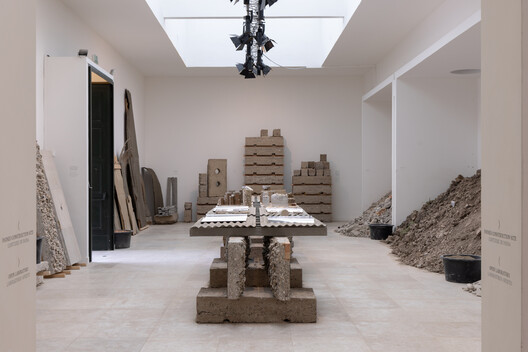
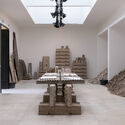
On November 23, 2025, the 19th Venice Architecture Biennale officially closed its doors. With 298,000 visitors, plus 17,584 preview attendees, it became the most visited Architecture Biennale to date. Reflecting on the edition, Carlo Ratti noted that "the true legacy of a Biennale is not defined by immediate popularity, but by what endures." A snapshot of the extensive participation and themes explored is available in ArchDaily's coverage, which includes interviews, an opinion article, and highlights from throughout the 2025 exhibition. As one edition ends and another begins, the curators for the next Biennale were also announced this week: architects Wang Shu and Lu Wenyu, founders of Amateur Architecture Studio, will lead the 20th International Architecture Exhibition, opening in May 2027. The 2025 edition also leaves behind a legacy of content and experiences, including a new documentary released this week, Søren Pihlmann: Make Materials Matter by Louisiana Channel, offering a glimpse into the work of the Pihlmann Architects founder and behind-the-scenes insights into the making of Denmark's exhibition at this year's Biennale.
Related Article
Make Materials Matter: Louisiana Channel Releases New Documentary on Danish Architect Søren Pihlmann2025 Holcim Foundation Awards and ECC Awards Recognize Sustainable Design Worldwide
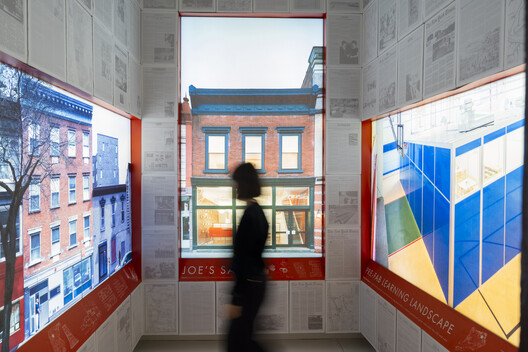
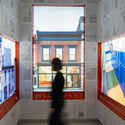
This week's architecture awards spotlight two landmark events emphasising sustainability, regeneration, and social impact across global contexts. The 2025 Holcim Foundation Awards ceremony, streamed live from Venice, unveiled its new Grand Prize format, honouring five regional winners whose projects exemplify transformational, climate-resilient, and community-oriented design, from adaptive reuse and cultural hubs to flood-resistant infrastructure and landscape-based resilience strategies. Meanwhile, the 2025 ECC Awards, presented by the European Cultural Centre on the closing day of its Time Space Existence exhibition, recognised four standout proposals chosen among 207 submissions from over 52 countries, all responding to themes of Repair, Regenerate, and Reuse through original, context-aware architectural and design work.
Key Urban Renewal and Public Equipment Projects from Thessaloniki to Rio de Janeiro
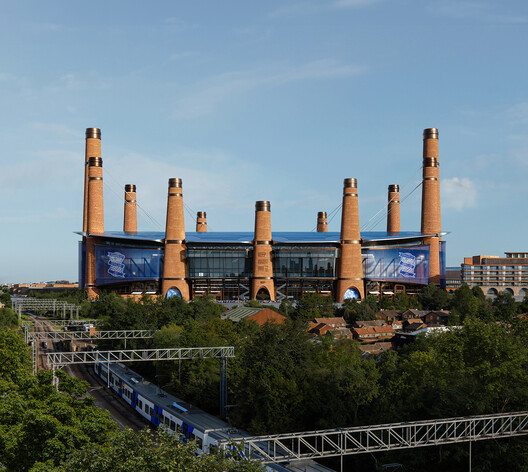
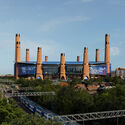
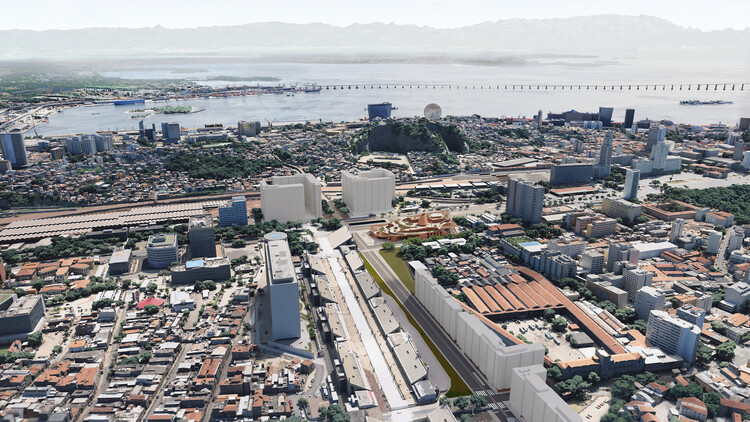
This week's news spotlights major urban renewal and public infrastructure projects across diverse global contexts. In Thessaloniki, Foster + Partners revealed a redevelopment masterplan for the former FIX brewery, converting the historic industrial complex along the city's western seafront into a mixed-use district. Meanwhile, in Rio de Janeiro, Kéré Architecture presented its design for the 40,000 m² Biblioteca dos Saberes: a public library and cultural centre rooted in Afro-Brazilian heritage, organized around a central "tree of knowledge" cylinder and featuring courtyards, roof gardens, shaded terraces, and a façade that responds to local climate. In Abu Dhabi, Mecanoo officially completed its Natural History Museum in the Saadiyat Cultural District, a 35,000 m² immersive institution whose pentagonal geometries evoke rock formations, water, and vegetation frame its design. And in Birmingham, Heatherwick Studio, in collaboration with MANICA Architecture, revealed the design for a new 62,000-seat stadium defined by twelve towering brick-chimney-like structures, a reinterpretation of the city's industrial past.
On The Radar
Openfabric Unveils Mantua's Piano del Verde Urban Green Plan for Ecological Resilience
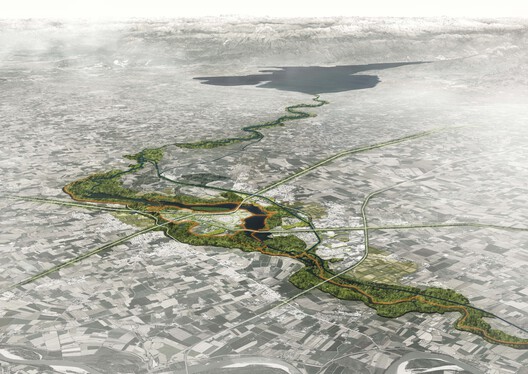
The Municipality of Mantua has presented its new Piano del Verde (Urban Green Plan), developed by Openfabric to guide the city's ecological transition and strengthen its role as a key environmental corridor along the Mincio River. Building on discussions launched during the 2018 FAO World Forum on Urban Forests, the Plan sets out a long-term strategy that integrates ecological, spatial, and social analysis. Rather than listing isolated green projects, it proposes a comprehensive environmental infrastructure that connects parks, waterways, streets, and agricultural land across the wider territory. The Plan is organized into five components: ecosystems that protect farmland and wetlands; ecological corridors that improve territorial connectivity; green streets that turn everyday routes into ecological and social links; afforestation areas identified for forestry and de-paving initiatives; and flood-retention basins that manage heavy rainfall. Because over half of Mantua's green surfaces are privately owned, the strategy also promotes shared stewardship between institutions and residents, combining large-scale ecological systems with small, everyday interventions. Contemporary artistic research is included to strengthen public awareness and the cultural value of the landscape.
Studioninedots Reveals Final Design for Spark, a New Elevated Urban Landscape in Utrecht
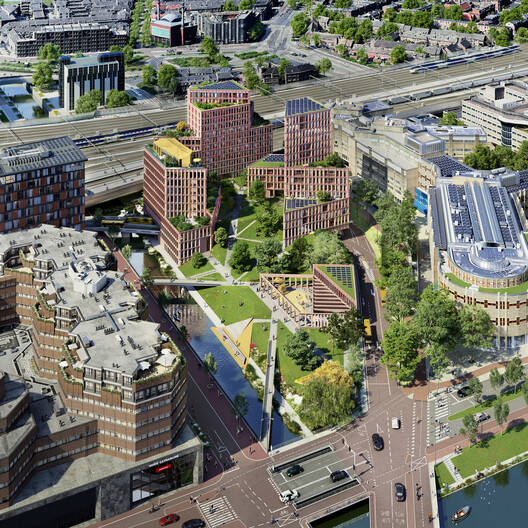
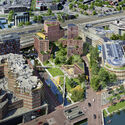
Studioninedots has released new images of Spark in Utrecht as the project reaches a major construction milestone, revealing the final design for the transformation of the Smakkelaarsveld district into a continuous, elevated urban landscape above the city's public transport network. Designed in collaboration with ZUS [Zones Urbaines Sensibles], the project reconnects this high-traffic site near Utrecht Central Station with the surrounding city through a mosaic-like arrangement of volumes shaped by urban lines and site simulations. These interconnected buildings introduce 169 new homes, offices, and public functions across multiple levels, integrated with an undulating green park that creates an open and accessible urban space. The program includes ground-floor workspaces, homes, hospitality venues, a gym, and community rooms, anchored by the Teahouse pavilion at the heart of the park and the Smakdak café terrace atop the office building. Beneath the landscape, the project incorporates a small harbour, bicycle parking, and the Park Basement, a large cultural venue linked to the extended Leidse Rijn canal. Connected by three bridges, the development prioritizes healthy urban living and establishes a safe, sociable environment in one of Utrecht's busiest areas.
UNS and Studio for New Realities Reveal New Landside Masterplan for Amsterdam Airport Schiphol
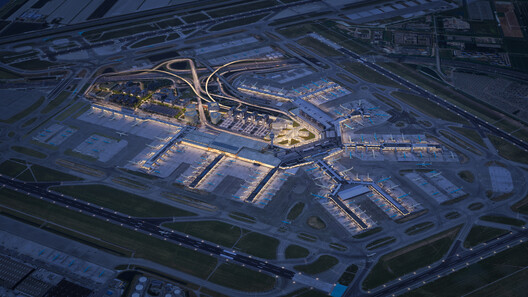
The Landside Masterplan for Amsterdam Airport Schiphol Centre, developed by UNS, Studio for New Realities, and Goudappel, sets out a strategic vision to address the airport's growing passenger demand, spatial constraints, and expectations for a higher-quality, climate-resilient travel experience. The plan adopts a "lean and mean" approach that maximizes capacity within the existing footprint. The proposal restructures mobility flows, public space, and real estate potential through an integrated, layered strategy, with the transformation of Jan Dellaertplein square into a walkable, green, pedestrian-first hub at its core. This renewed square will unite terminals, metro and bus connections, and future developments such as Terminal South and OVAH, shifting the airport's centre of gravity and turning a congested forecourt into a vibrant civic space with amenities and retail. A new unifying spine simplifies circulation by improving wayfinding, reorganizing high-traffic zones, and reducing walking distances between transport nodes and mixed-use areas to the south.
This article is part of our new This Week in Architecture series, bringing together featured articles this week and emerging stories shaping the conversation right now. Explore more architecture news, projects, and insights on ArchDaily.


